

In the world of banknote collecting, the term "specimen" refers to a banknote that has been deliberately altered to prevent its use in circulation. While in some countries, specimen notes were created for testing, training, or archival purposes, in Czechoslovakia, most specimen banknotes were perforated at the end of their circulation. This allowed people to keep the note as a reference or collectible while ensuring it was no longer valid as currency.
Throughout the times of Czechoslovakia the types of the banknotes in the circulation had been chaning quite often. It would not be rare to see banknotes swap (and followed depreciation of the currency) every 5 years. Therefore we can now enjoy collecting many various issues of the paper money from Czechoslovakia.
Perforation was commonly used during times of currency transitions, when older banknotes were being withdrawn from circulation. Instead of immediately destroying the notes, the authorities perforated them to mark them as devalued. This process ensured that the banknotes could no longer be used for payments, but they could still serve as souvenirs, collectibles, or official records.
In some cases, Czechoslovak banknotes were perforated when new series were introduced. This method helped prevent confusion between old and new issues while allowing institutions and individuals to retain copies of the older notes without monetary value.
Collectors may come across different types of perforations on Czechoslovak banknotes:
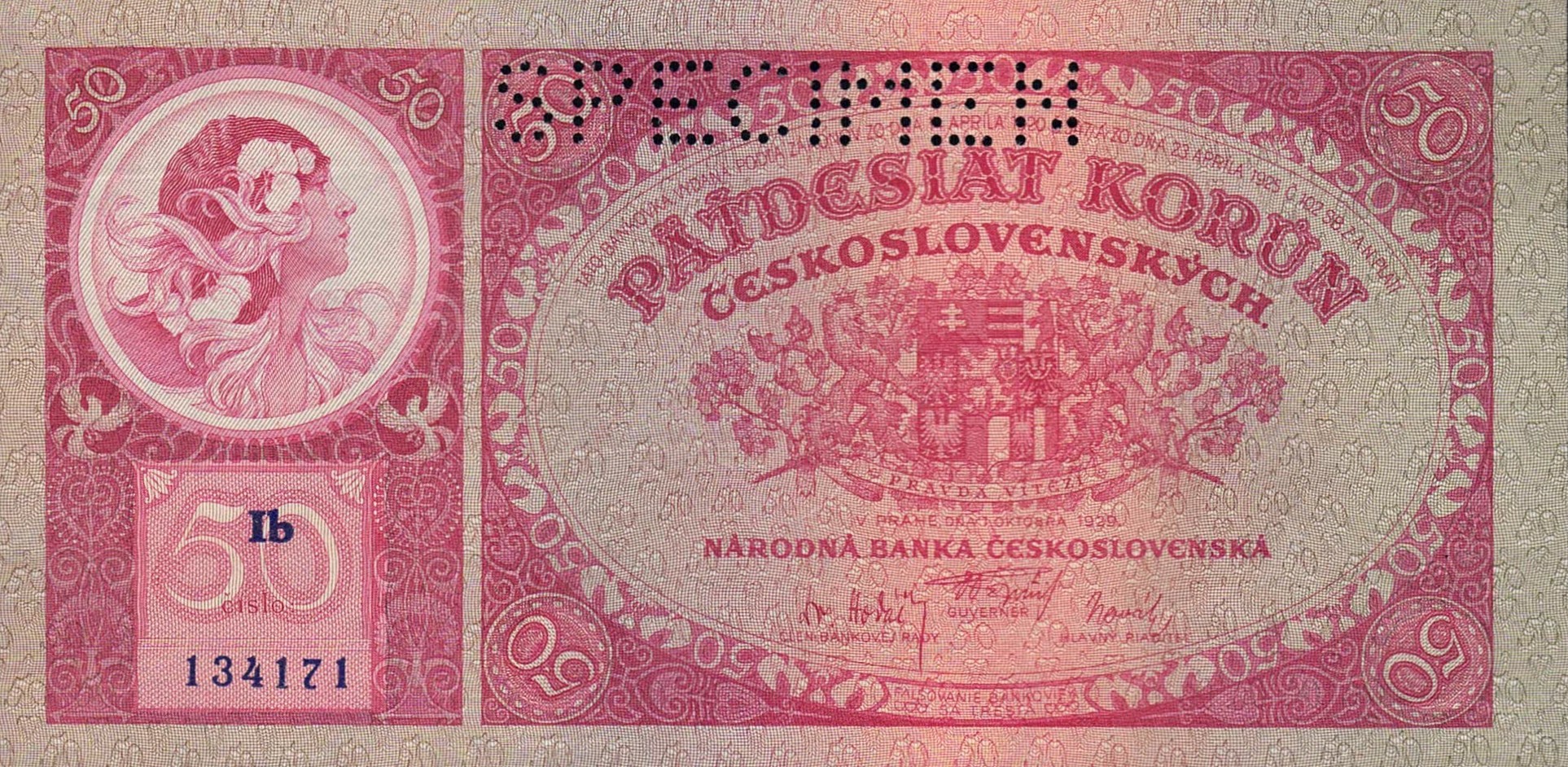
"SPECIMEN" – A perforated marking, often used on devalued notes that were no longer in circulation. You can observe literal holes in the shape of word Specimen perforated into the banknote.
Czechoslovakia 50 Korun 1929 Specimen – particially designed by Alfons Mucha, UNC condition.
"NEPLATNÉ" – Meaning "invalid," only used in Slovakia, marking a banknote as no longer legal tender.

Czechoslovakia 10 Korun 1927 Specimen „Neplatne“ – particially designed by Alfons Mucha, aUNC condition.
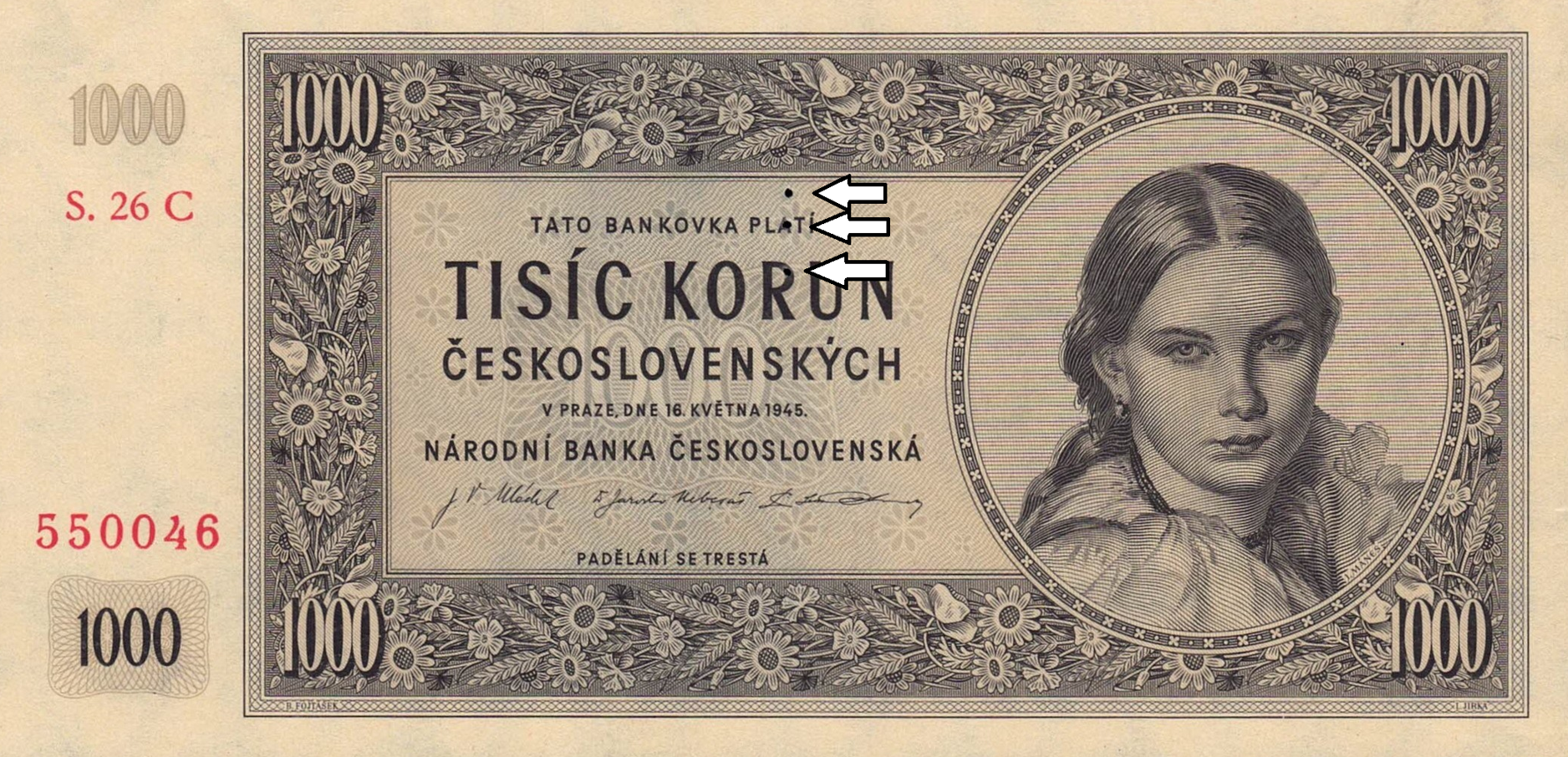
Three Dots (⠂⠂⠂) – A pattern of perforation sometimes seen on specimen or demonetized notes. It can be visible as three small holes in row perforated into the baknote.
Czechoslovakia 1000 Korun 1945 Specimen – 3 holes, UNC condition.
Perforation Holes – Occasionally, small holes (3-5 mm) were added to notes in addition of printed or perforated text.

Slovakia 20 Korun 1939 Specimen + Perforation holes – F condition.
For collectors, perforated banknotes are generally worth significantly less than non-perforated examples of the same note and condition. Since perforation alters the note and makes it less "original," it typically reduces the value by several times compared to an unmarked note. However, some collectors focus specifically on specimen notes, especially if they are from rare series or have unique historical significance.
Generally, there are more specimen pieces than non-perforated ones. Therefore non-perforated baknotes are more expensive because they are simply a lot scarcer.
While perforated banknotes are often overlooked in favor of pristine, uncirculated examples, they still hold historical and educational value. Whether used to mark the end of a banknote’s circulation or as a way for people to keep an otherwise obsolete note, specimens remain an important part of numismatics. For collectors, they offer an affordable way to own historical banknotes while preserving a piece of monetary history.


