

For collectors, the condition of a banknote is one of the most important factors in determining its value. Banknotes are not just pieces of paper; they are witnesses to history, carrying stories of past economies, political changes, and artistic trends. A perfect example is the iconic 100 Kčs banknote from 1961, featuring a farmer and a woman holding wheat ears—a powerful symbol of Czechoslovakia’s socialist-era focus on agriculture and labour. Once a common sight in people’s wallets, today it is a treasured piece of history.
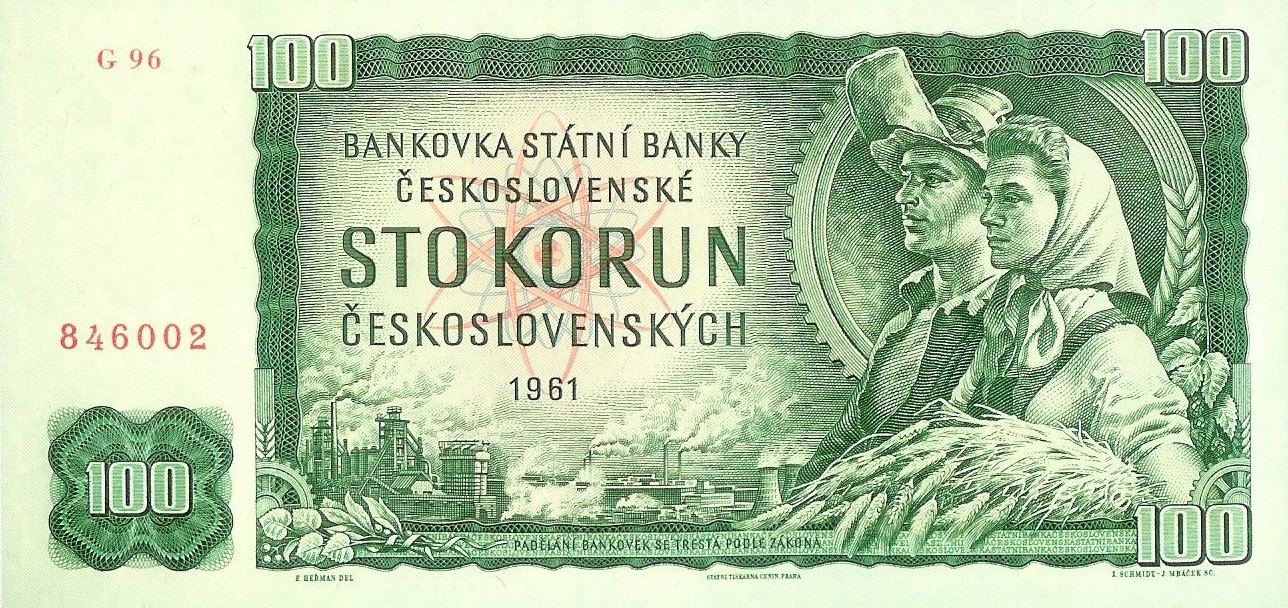
Czechoslovakia 100 Korun 1961 – the most well-know Czechoslovak banknote, still to be find in the households of Czech and Slovak republic, UNC condition.

Slovakia 50 Korun 1940 – visible creases over the banknote, central folds, still relatively crisp, VF condition.
To ensure consistency, numismatists use a standardized grading scale to evaluate a note’s condition. This grading helps determine a banknote’s desirability, as even small imperfections can significantly affect its value.
Collecting banknotes is a hobby, and every collector has their own preferences when it comes to condition. Some enjoy collecting heavily circulated pieces, imagining the countless hands that have touched them and the history they have witnessed. Others seek only perfect UNC banknotes, which can be quite rare and expensive, especially for older issues. No matter the condition, each banknote tells a story and holds value in the eyes of those who appreciate its historical significance.
Czechoslovakia 5 Korun 1921 – example of worn down banknote with significant central creases, even with a small whole in the middle, the paper lost all the crispness, condition VG.
When grading a banknote, we assess the sharpness of its corners, the number of folds, the presence of stains or dirt, color vibrancy, and whether any part of the note is missing. These factors help collectors determine the right condition of each piece.
Czechoslovakia had a rich history of banknote designs, from the elegant First Republic issues to the socialist-era notes reflecting state ideology. Some notes, once used in everyday transactions, are now rare treasures sought after by collectors worldwide. Understanding grading is essential to preserving this history and ensuring that every collector makes informed decisions when buying or selling banknotes.


